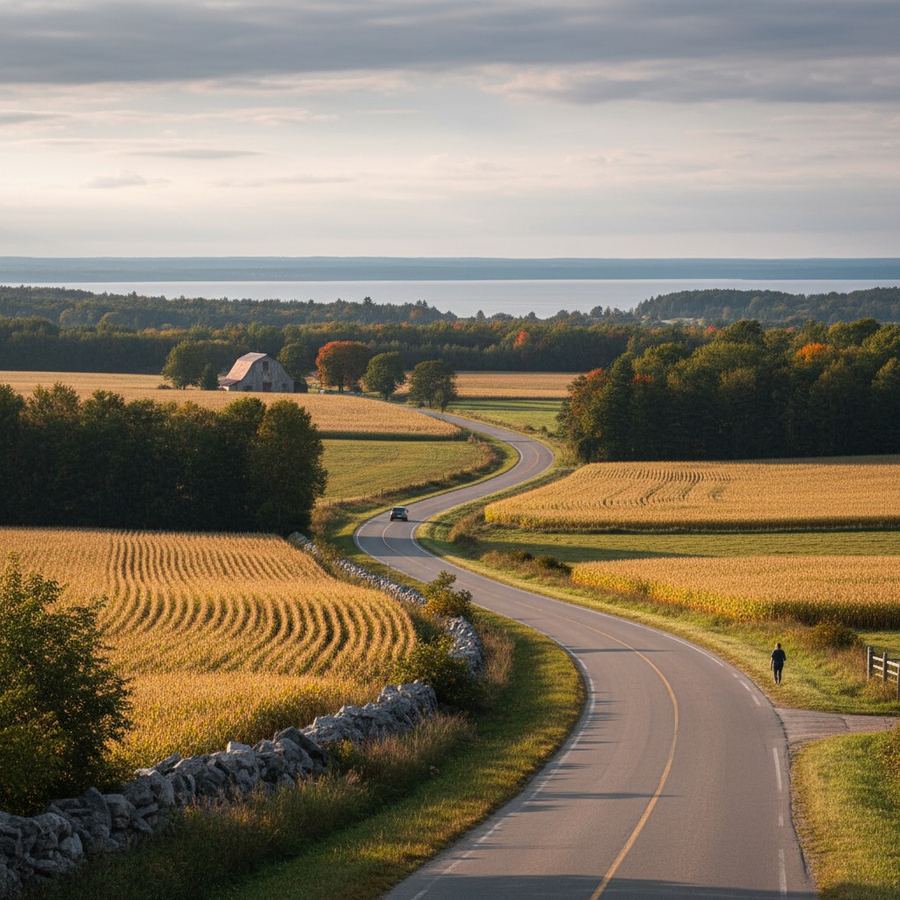
The question most people moving out of the GTA ask first is "Where can I afford a house?" The question they should ask first is "How often do I need to be in the city, and what am I willing to give up?" Because the trade-offs in Southern Ontario are real. You can buy a house in Petawawa for a third of what it costs in Barrie, but you are also four hours from Toronto, the nearest hospital may not have every specialist, and the broadband might not support your video calls. Every community on this list involves a calculation, and it pays to be honest about what matters to you.
What follows is organized by lifestyle rather than geography. The reality of relocating to Southern Ontario varies enormously depending on whether you commute, work remotely, are retired, or are tied to a specific employer.
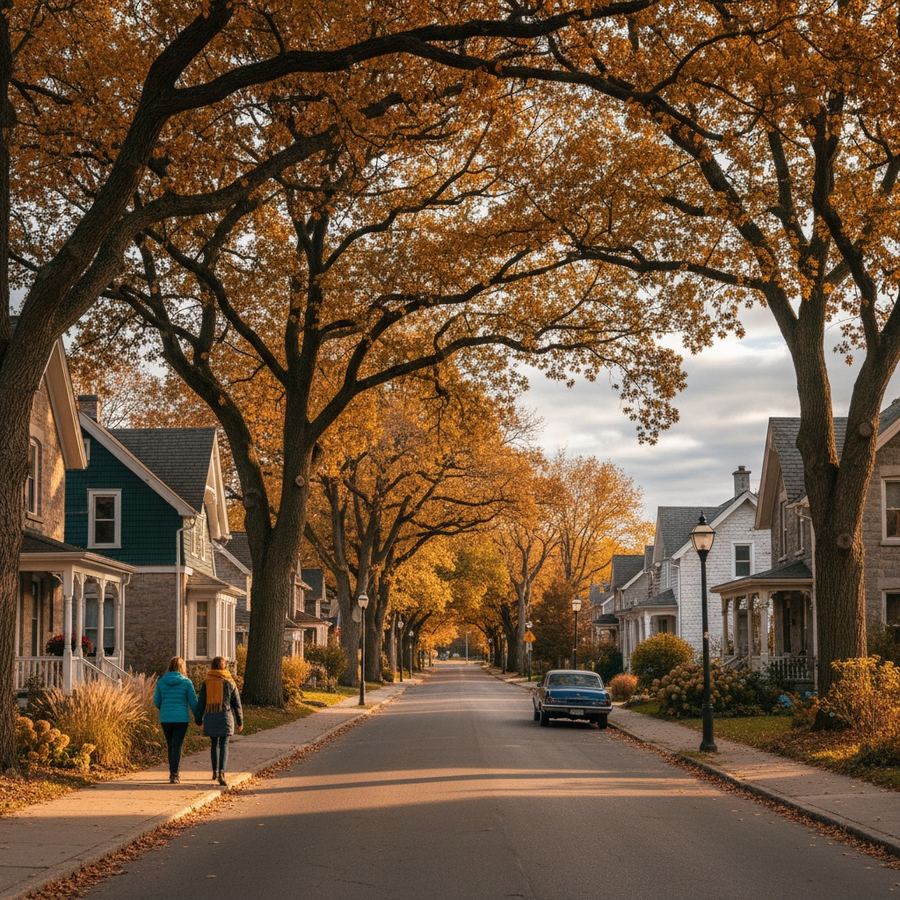
Commuter Towns: Still Connected to the GTA
Barrie
Barrie is the most accessible option for GTA commuters who want to leave the city. The GO Transit train runs to Union Station in Toronto, and while the ride is about 90 minutes each way, it exists, which puts Barrie in a different category from almost every other town on this list. Highway 400 connects directly to the GTA, though the commute by car is punishing during rush hour. Barrie has a population over 150,000, a full-service hospital, shopping, and a growing restaurant scene. Housing is cheaper than the GTA but has risen significantly. It is a small city, not a small town, and people expecting a rural lifestyle will not find it here.
Orillia
Orillia is about 135 km north of Toronto on Highway 11, sitting between Lake Simcoe and Lake Couchiching. It is smaller than Barrie (population around 33,000) and has a more small-town feel, with a walkable downtown and waterfront. GO Transit bus service connects to Barrie, adding a transfer to the train to reach Toronto. The commute is long but workable for people who only go into the city a couple of days a week. Orillia has good healthcare access and a solid base of services. The community has a well-established identity, and orillia.ca is a useful starting point for understanding what the town offers to potential residents.
Small Town but Connected
Collingwood
Collingwood has transformed over the last two decades from a modest Georgian Bay town into one of the most desirable small communities in the province. Blue Mountain Resort brings tourism dollars, the restaurant scene is strong, and the downtown has independent shops that serve both visitors and locals. The flip side is that housing prices have climbed to match the demand. A detached house in Collingwood costs more than in many comparable towns. The commute to Toronto is about 160 km on Highway 400 and Highway 26, and there is no rail or express bus service. Collingwood works best for remote workers, retirees, or people in tourism and hospitality. For a community perspective, collingwood.net covers local life beyond the resort.
Shelburne
Shelburne is about 100 km northwest of Toronto and has become a commuter option for people who drive to the GTA. Highway 10 connects to Highway 410, which feeds into Brampton and Mississauga. The drive is not fast, but it is manageable for people heading to jobs in the western GTA rather than downtown Toronto. Housing is cheaper than Barrie or Collingwood, and the town has basic services. The trade-off is that Shelburne is smaller and has fewer amenities. It is a practical choice, not a glamorous one.
Military and Government
Petawawa and the Ottawa Valley
Garrison Petawawa is the largest army base in Canada, and the town of Petawawa exists largely because of it. If you are posted here or working in the defence sector, the area has affordable housing, river access, and proximity to Algonquin Park. For everyone else, Petawawa is remote by Southern Ontario standards, about 350 km from Toronto and 170 km from Ottawa. The Ottawa Valley is beautiful but services can be spread thin. For community and military family information, petawawa.com covers the local picture.
Kingston
Kingston is a government, military, and university town about 265 km east of Toronto on Highway 401. It has excellent healthcare (Kingston General Hospital is a teaching hospital), a strong cultural scene, and a walkable historic downtown with limestone architecture. The real estate market is more moderate than the GTA but has risen with demand from retirees, remote workers, and university-connected buyers. Kingston is large enough (population around 135,000) to be self-contained. You do not need Toronto for anything, which is the point.
Retirement and Lifestyle
Prince Edward County
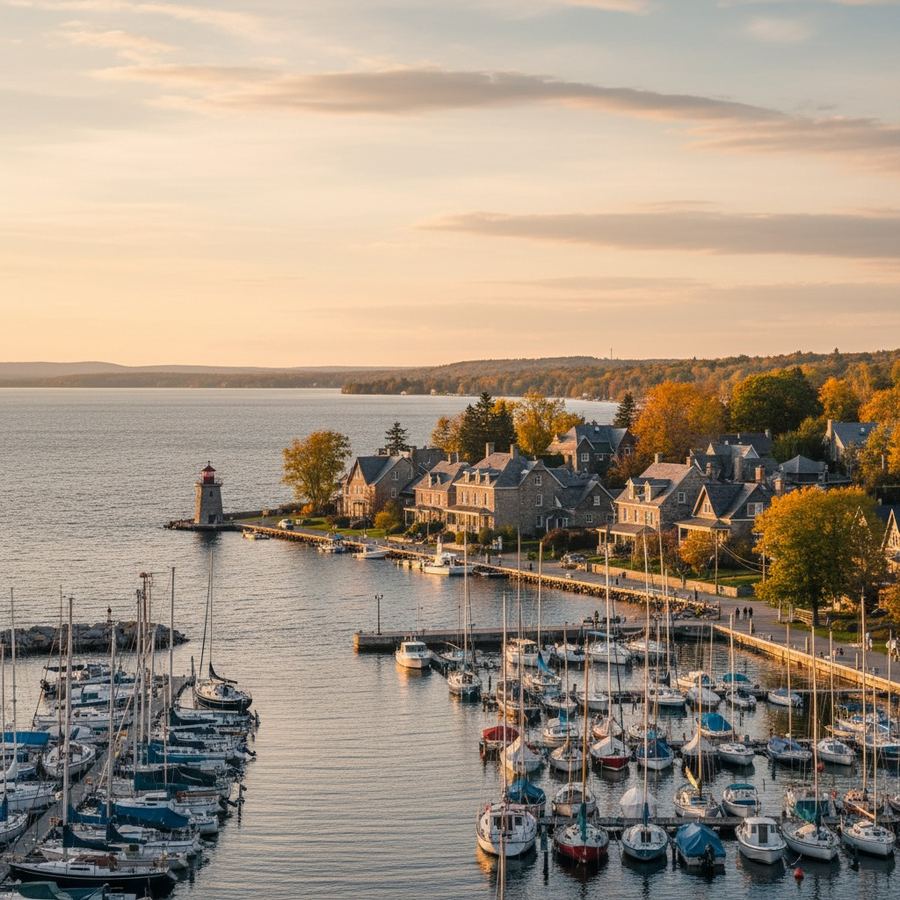
Prince Edward County has become the retirement and second-career destination of choice for a certain kind of Torontonian: food-oriented, wine-curious, looking for beauty and quiet. The County has excellent restaurants, wineries, and the beaches at Sandbanks Provincial Park. The reality check is that healthcare in the County is limited. The nearest full hospital is in Belleville, about 30 minutes away. Winter is quiet, and some businesses reduce hours or close entirely from November through April. If you are comfortable with that, the County offers a quality of life that is hard to match.
Perth and the Rideau Corridor
Perth and the surrounding Rideau Lakes area attract retirees and remote workers drawn to the heritage architecture, slower pace, and lower housing costs compared to the GTA. Perth has a hospital, a decent selection of shops and restaurants, and a strong community arts scene. The town is about 290 km from Toronto but only 80 km from Ottawa, which gives residents access to a major city for airports, specialists, and shopping. The Rideau corridor from Smiths Falls through Perth to Westport is genuinely attractive countryside with good canoeing and cycling.
Remote Work Friendly
Muskoka
Muskoka attracts remote workers who want lake access and natural beauty. Huntsville, Bracebridge, and Gravenhurst all have enough services for daily life. The challenge is broadband. Coverage has improved but is uneven, particularly around the lakes. If your work depends on reliable high-speed internet, check the specific address before buying. Muskoka is also expensive by small-town standards, with waterfront properties commanding cottage-country premiums year-round.
Bruce Peninsula
The Bruce Peninsula offers some of the most affordable real estate in Southern Ontario, along with Lake Huron shoreline, excellent hiking, and a pace of life that is genuinely slow. The trade-offs are significant: healthcare is limited, broadband is patchy outside the larger towns, and winter driving on the two-lane highways can be difficult. Owen Sound is the nearest service centre, and even it is small. This is a choice for people who want to be far from everything, on purpose.
The Honest Version
Every relocation involves things that nobody mentions in the real estate listing. Winter driving is a real factor anywhere north of Barrie. Healthcare wait times are longer in rural areas, and some communities have trouble attracting family doctors. The social adjustment is real: small towns have established social networks, and it takes time to break in. Amenities you take for granted in the GTA, from ethnic grocery stores to late-night dining, may not exist.
That said, people move to these communities every year and stay. The ones who are happiest tend to be realistic about what they are getting and what they are giving up. The moving to Southern Ontario guide covers more of the practical details.